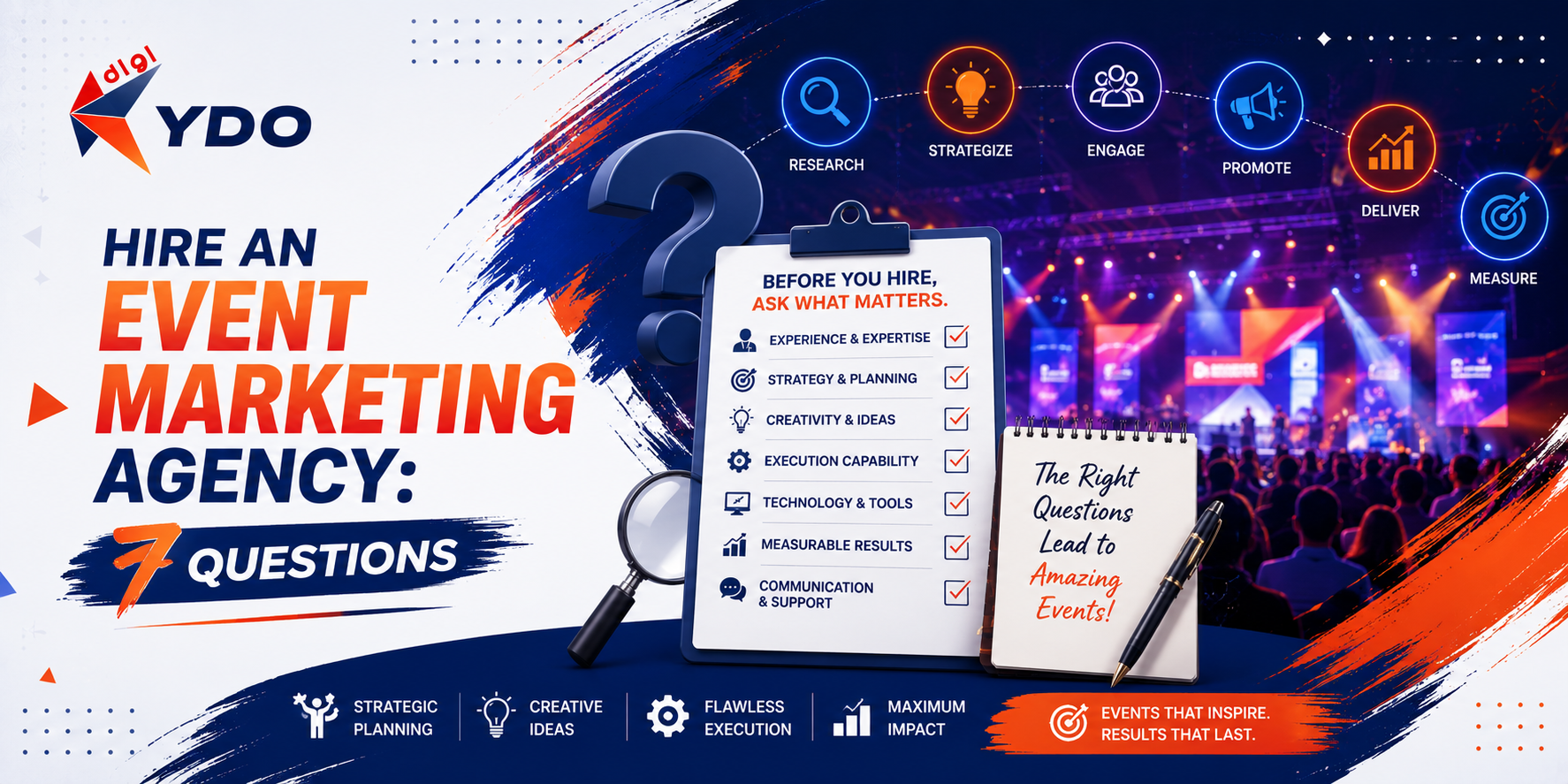
Every agency will tell you it can market an event. Most of them can produce a poster, run advertisements and post to Instagram, and for a great many clients that is the whole job.
An event is not one of those clients. There is a date, it does not move, the police permission is for that morning, and the field either fills before the door closes or it does not. That single constraint breaks a lot of otherwise good agency habits, and the questions below are designed to find out, in one meeting, whether the firm across the table has ever worked inside it.
1. Have you worked to a date that could not move, and what happened in the middle?
This is the question that sorts the room, and the answer to listen for is the second half.
Every race campaign follows roughly the same curve: a spike when registration opens, a long flat stretch, then a much larger spike in the final fortnight. An agency that has run one knows the flat middle is normal. An agency that has not will describe it as a problem, or worse, will propose fixing it with a discount, which teaches your audience to wait and punishes everybody who paid early.
Ask what they did during the quiet weeks on a previous event. The useful answer involves sustaining visibility and releasing news in pieces, because the final-fortnight rush is built almost entirely out of people who saw the event during the middle. Our own reasoning on this sits in event registration marketing, and you should expect any serious firm to have a comparable view.
2. Who owns the participant data when this is over?
Ask it plainly and get the answer in writing.
The list of people who entered your event is the most valuable asset the campaign produces, because next year's registration opens with a spike rather than a standing start only if you can write to them. That list can end up in three places: yours, a registration platform's, or an agency's. Only the first is acceptable.
The related question is whether the agency will export, clean and hand over that list at the end of each edition, segmented by category, or whether it will sit unexported in a platform account nobody logs into until eleven months later. This is the most commonly wasted asset in the entire category.
While you are there, ask the same of the advertising accounts and the analytics. They should be in your name, with the agency granted access, not the other way round.
3. Who is physically present on race weekend?
An event campaign does not end when the registrations close. The forty-eight hours before the start are the highest-traffic period your website will ever have, and almost all of it is people looking for reporting times, bib collection hours, road closures, parking and baggage arrangements.
Somebody has to be reachable during that period to correct a wrong timing, publish a change, answer the comments arriving under every post, and update the race-day page when a road closure moves. Ask who that person is, what hours they are available, and what happens at nine on the Saturday evening when a detail changes.
Then ask who is at the venue on the morning, and what they are producing. The photographs, the finish-line video and the results are next year's entire marketing asset, and an agency that plans to collect them from the organiser afterwards will receive nothing usable.
4. Can you sell to a sponsor, or only to a runner?
These are two different disciplines that share a logo, and most agencies are only equipped for one.
The participant campaign is consumer marketing: fast decisions, social distribution, conversion on a phone. The sponsorship campaign is a business sale to a corporate buyer working inside an annual budget cycle and an internal approval chain, who needs an audience description, an inventory of what is actually for sale, and reporting they can show their own management afterwards.
An agency that answers this question by describing creative has not understood it. What you want to hear is inventory, category exclusivity, budget calendars and the difference between a marketing sponsor and a CSR desk. The full shape of that work is on sponsor and CSR acquisition, and it is a fair test of whether the firm has done it.
5. Will you build the registration path, or only advertise into somebody else's?
There is a meaningful difference between an agency that runs campaigns towards a registration page and one that will take responsibility for the page itself.
The questions to ask: will you test the payment gateway under a concentrated rush before the final evening, on a mobile connection? What happens when a card fails at peak, and does the retry keep the entered details? Can a company enter forty people on one invoice rather than making forty card payments? Does the form take payment before it asks for blood group and T-shirt size, or after?
Every one of those is where entries leak, and an agency that treats the event website as somebody else's department will advertise successfully into a broken checkout. If the site is being built or rebuilt as part of this, the website development scope should say so and be priced rather than assumed.
6. What will you do between editions?
Most event marketing is commissioned for a season and disappears for the rest of the year. That is a costly habit, for two reasons.
The first is sponsorship. A sponsor's budget is allocated on their calendar, and an event that only exists publicly for six weeks arrives after the money is committed.
The second is the participant list. Results left online, photographs findable by bib number, a thank-you sent while the morning is still fresh, and a modest presence through the year are what make the next edition open with momentum. An agency that has no answer for the other ten months is proposing to rebuild the audience annually from nothing.
7. What will you not promise?
Ask it directly, and treat a confident number as a warning rather than as reassurance.
Nobody can promise you a registration figure. Entries depend on the date, the competing events that fortnight, the price, the weather in the final week, the standing of your event and how the running community feels about it, and most of that is outside anybody's control. An agency that commits to a number either does not know the category or intends to renegotiate later.
What can honestly be committed to is the work: audiences separated, the questions answered on the page, creative built to be forwarded rather than admired, the list kept and used, the checkout tested, the sponsor inventory documented, and named people available across race weekend.
An agency that has worked in a genuinely constrained field will find this question easy. The habit transfers: in healthcare marketing, advertising rules make claim-free work the only option available, and a firm used to that is comfortable describing method rather than promising outcomes.
What to bring to the meeting
Three things make a first conversation useful rather than theoretical.
Last year's registration curve, week by week, if you have it. It is the single most informative document about your event, and it tells an experienced agency more than any brief.
Your date, and the two dates on either side of it in the regional calendar, so a clash can be identified before it is a problem.
What you sold in sponsorship last year, and what a sponsor asked for that you could not supply. That gap is usually the highest-value work available.
You can see how we approach the category on our marathon and event marketing page, read who you would be working with on our about page, see the wider work we do as a digital marketing agency in Kolkata, and bring the three documents above to a conversation.
Digi Kydo, 17R Dover Terrace, Ballygunge, Kolkata, West Bengal 700019. Call +91 98305 45687 or write to [email protected].
Frequently asked questions
What should I ask an event marketing agency before hiring them?
Seven questions cover most of the risk: whether they have worked to a fixed date and what they did during the quiet middle of a campaign; who owns the participant data afterwards; who is reachable across race weekend and who is at the venue; whether they can sell to sponsors as well as to participants; whether they will take responsibility for the registration path and payment flow; what they will do between editions; and what they refuse to promise. The last answer is usually the most revealing.
Should an event marketing agency handle sponsorship as well as registrations?
They are separate disciplines and it is reasonable to buy them separately, but they should at least be coordinated. Participant marketing is consumer work with short decision cycles and social distribution. Sponsorship is a business sale to corporate and CSR desks operating on an annual budget calendar, needing an audience description, a written inventory of what is for sale and post-event reporting. An agency that treats sponsorship as a creative exercise has not done it before.
Who should own an event's participant registration data?
The organiser, without exception. That list is the foundation of the following edition, because returning entrants are the least expensive registrations you will ever take. It should be exported, cleaned and segmented by category after each event and held in an account in the organiser's name. The same applies to advertising and analytics accounts, which should belong to the organiser with the agency granted access.
How far in advance should an event hire a marketing agency?
Early enough to influence the date, the pricing tiers and the category structure, rather than only the promotion. Sponsorship conversations in particular have to begin months out because corporate budgets are allocated annually. Bringing an agency in after registration has opened limits them to advertising into decisions already made, several of which are usually the reason the campaign is difficult.
Is a specialist event agency better than a general digital marketing agency?
What matters is whether the firm has worked to an immovable deadline, not the label it uses. A general agency that has run several events understands the campaign curve, the sponsorship calendar and the race-weekend information load. A specialist that has only ever produced creative for events may not. Ask about a previous event in detail, and judge the answers rather than the positioning.